
Before She Belonged to the World: Dolly Parton’s Roots in the Smoky Mountains

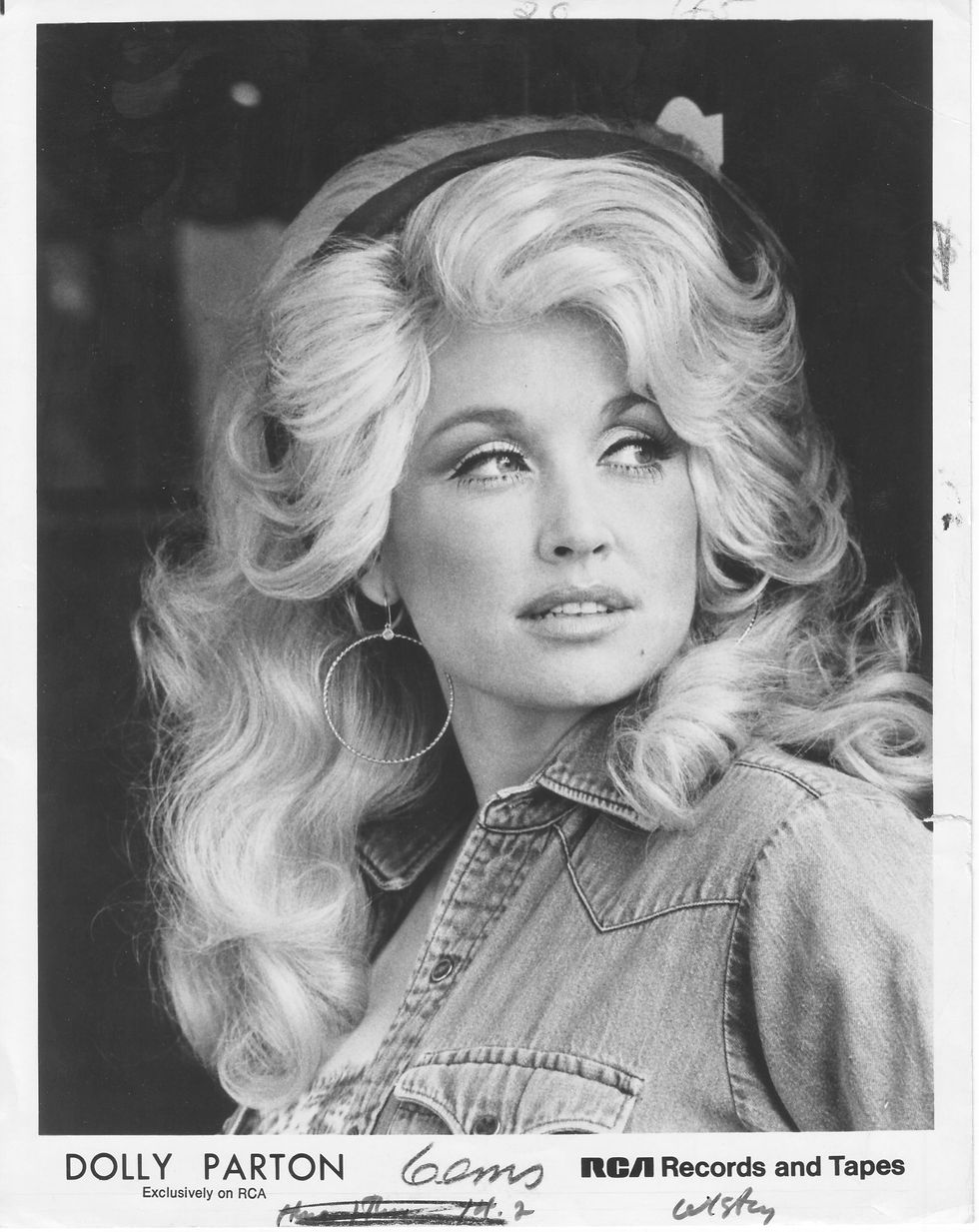
Today, the world remembers Dolly Parton as a singer, songwriter, actress, businesswoman, and philanthropist.
Here in the Smoky Mountains, we remember something more personal.
Before Dolly belonged to Nashville, Hollywood, or the millions of people who found comfort in her music, she belonged to these mountains. Her story began among the creeks, ridges, churches, farms, and close-knit communities surrounding Greenbrier, Emerts Cove, Pittman Center, Catons Chapel, Richardson Cove, and Locust Ridge.
This was not merely the place where Dolly happened to be born. It was the soil from which much of her character grew.
Her faith, humor, imagination, work ethic, generosity, and remarkable gift for storytelling all bear the marks of Southern Appalachia. Even after rhinestones became part of her public image, she remained unmistakably a mountain woman.
With her passing today, people around the world will remember the songs and accomplishments. But to understand Dolly Parton more fully, we must return to the small corner of the Smokies where her family’s story began.
The Partons of Greenbrier
Dolly’s connection to the Smoky Mountains reaches back generations before her birth.
During the 1850s, her great-great-grandfather, Benjamin Christenberry “Chris” Parton, and his wife, Margaret, settled in Greenbrier. They made their home near Little Bird Branch, below Greenbrier Pinnacle, in what is now Great Smoky Mountains National Park.
Greenbrier was not one neatly organized settlement. It consisted of numerous family communities scattered along the Middle Prong of the Little Pigeon River and the streams descending from the surrounding mountains. Families cleared small farms from narrow patches of bottomland, built cabins and barns, raised children, worshiped together, and buried their loved ones in family cemeteries.
Life there demanded practical knowledge. People had to understand the land, seasons, water, plants, animals, and weather. A family’s survival could depend upon when it planted, what it preserved, how well it maintained a roof, and whether neighbors appeared when help was needed.
The Partons were part of this world.
Benjamin Parton survived a gunshot wound to the head during the Civil War and lived until 1916. He and other members of the family are buried in the Parton Cemetery overlooking Little Bird Branch. The cemetery remains in Greenbrier today—quiet evidence that Dolly Parton’s relationship with these mountains was ancestral, not manufactured.
When land was acquired for the establishment of Great Smoky Mountains National Park, Greenbrier families were required to leave their homes. Many did not travel far. They moved beyond the park boundary into places such as Emerts Cove, Webb Creek, Richardson Cove, and the ridges surrounding what would become Pittman Center.
Members and descendants of the Parton family relocated toward Locust Ridge.
The park preserved the forests, streams, and mountains, but it also changed a human landscape. Homes disappeared. Fields returned to forest. Chimneys and stone walls became the remaining evidence of communities that had once filled those valleys.
The Partons carried Greenbrier with them.
A generation later, one of their descendants would carry its story around the world.

Born Along the Little Pigeon River
Dolly Rebecca Parton was born on January 19, 1946, the fourth of twelve children of Robert Lee and Avie Lee Owens Parton.
Her beginnings are commonly described as Locust Ridge, Sevierville, or Pittman Center. Each description points toward the same small mountain world. She was born in the vicinity of Pittman Center and Emerts Cove, along the upper reaches of the Little Pigeon River, and raised nearby on Locust Ridge.
At that time, Pittman Center was not the incorporated town we know today. Much of the broader community was still known locally as Emerts Cove. Roads followed the river and wound through hollows. Homes stood on small farms, against hillsides, or wherever families could find enough level ground to build.
Dolly arrived during winter, in a mountain cabin far removed from a modern hospital.
Dr. Robert F. Thomas, a physician and traveling preacher known throughout Sevier County, made the trip to deliver her. He was the kind of country doctor who went where he was needed, regardless of the distance, weather, or a family’s ability to pay.
The Partons had little money. Dolly’s father reportedly paid Dr. Thomas with a sack of cornmeal produced from the family’s own corn.
That exchange tells us more about Dolly’s beginnings than almost any statistic could. A child was delivered at home by a mountain doctor, and the bill was settled with food raised from the land.
Dolly never forgot Dr. Thomas. She later wrote a song about him, and the Robert F. Thomas Chapel at Dollywood bears his name. In honoring him, she preserved the memory of an entire class of Appalachian caregivers—men and women who crossed rivers, climbed ridges, entered humble homes, and served people who could often offer little in return.

A Childhood Shaped by the Land
The Parton family eventually settled in a small cabin and farm on Locust Ridge, north of Greenbrier and east of Pittman Center.
The home had no electricity or indoor plumbing. Water had to be carried. Heat came from wood. Food depended upon gardens, corn, livestock, preserved vegetables, and whatever else the family could produce or afford.
With twelve children, privacy was nearly nonexistent. Clothes were handed down, repaired, and reused. Beds were shared. Newspapers helped insulate the cabin walls.
Yet the family’s life cannot be understood through poverty alone.
Dolly’s father, Lee Parton, worked as a sharecropper, farmer, and laborer. Although he could neither read nor write, she repeatedly described him as one of the smartest men she knew. He understood work, land, weather, crops, animals, and how to stretch limited resources across a large family.
Her mother, Avie Lee, brought another form of wealth into the home. She knew old songs, mountain stories, folk traditions, Scripture, and the art of making children feel loved when material comforts were scarce.
She sang ballads with roots extending back through the British Isles and generations of Appalachian families. She turned scraps of cloth into useful things and ordinary moments into stories.
From her mother, Dolly learned that imagination could transform hardship without denying it.
The famous coat made from pieces of discarded fabric became valuable because of the love and biblical story sewn into it. A corncob became a doll. A porch became a stage. A tobacco stick, broom handle, or tin can could become part of a performance before an imaginary audience.
That was Appalachian resourcefulness in its purest form: make something from what you have.
The Creeks and Swimming Holes of Home
Water runs through Dolly’s home country.
Greenbrier is shaped by the Middle Prong of the Little Pigeon River. Emerts Cove opens around the same river after it leaves the national park. Webb Creek, Birds Creek, and countless smaller branches carry cold mountain water through the surrounding communities. Locust Ridge rises among tributaries flowing toward Richardson Cove and the Little Pigeon watershed.
Local accounts describe the Parton children playing in creeks around Catons Chapel and Richardson Cove. Although no dependable record identifies one particular place as “Dolly’s swimming hole,” it is entirely consistent with the life she described—and with childhood in this area—that local creeks and swimming holes were part of her world.
For mountain children, a swimming hole did not require a sign, admission fee, or concrete pool. It might be a deeper bend beneath a sycamore, a place where water collected behind large rocks, or a shaded pool reached by following a path through the woods.
On summer days, those cold waters offered relief from the heat and from a crowded cabin. Children waded barefoot, turned over rocks, caught minnows, skipped stones, and learned where the current was strong and where the bottom dropped away.
Such experiences taught lessons no classroom could duplicate. The river was a playground, but it also demanded respect. Water could be gentle in summer and dangerous after a storm. Children learned to read clouds, currents, rocks, and changes in the sound of a creek.
When Dolly later wrote about mountain streams, summer nights, birds, fields, and crickets, she was not inventing an Appalachian setting. She was remembering a landscape she had touched with her own hands and crossed with her own bare feet.

Faith, Music, and Mountain Memory
Music in the Parton family did not begin as a career plan. It began in the home and church.
Dolly’s maternal grandfather, the Reverend Jake Owens, was a Pentecostal preacher. Her family helped build the House of Prayer, where some of her earliest memories involved singing gospel music. She began performing publicly in church while still a small child.
In these mountain churches, music was rarely passive. People sang with conviction because the words reflected real experiences—sin and redemption, sorrow and hope, death and reunion, hardship and divine provision.
Dolly absorbed that emotional honesty.
She also inherited the Appalachian tradition of turning life into story. Mountain songs preserved family histories, tragedies, courtships, murders, departures, conversions, and losses. They helped people remember what might otherwise disappear.
Dolly became one of the greatest practitioners of that tradition.
“Coat of Many Colors” preserved her mother’s love. “In the Good Old Days (When Times Were Bad)” resisted the temptation to make poverty sound charming. “My Tennessee Mountain Home” recalled the peace, sounds, and natural beauty of her childhood landscape.
Her songs were polished enough for radio, but their foundations were laid in cabins, churches, fields, and family gatherings.
Leaving Without Abandoning Home
The morning after graduating from Sevier County High School in 1964, Dolly left for Nashville.
In one sense, she traveled far beyond the world into which she had been born. In another, she never left it.
She took the Smokies with her—in her accent, humor, faith, melodies, stories, and understanding of people. She never treated her mountain background as an embarrassment to be erased. Instead, she made it central to her identity.
When success came, she brought opportunity home.
Through Dollywood and her other ventures, she created thousands of jobs for people in the region. Through the Dollywood Foundation and Imagination Library, she invested in children like the child she had once been. The program was inspired by her father’s inability to read, transforming a source of family pain into books for children around the world.
After the 2016 wildfires devastated Sevier County, she called the victims “my people” and helped provide direct assistance to families who had lost their homes.
Those words carried the weight of belonging.
“My people” meant the descendants of families who had survived in Greenbrier, Emerts Cove, Locust Ridge, and countless other Appalachian communities. It meant people who worked hard, helped neighbors, buried their dead on family hillsides, and began again after loss.

The Mountain Girl Beneath the Rhinestones
Dolly understood the difference between where a person lives and where a person belongs.
She belonged to the Smokies.
She belonged to the Partons of Greenbrier and the families who rebuilt outside the park. She belonged to Emerts Cove and Pittman Center, where a mountain doctor once accepted cornmeal for bringing a child into the world. She belonged to Locust Ridge, Catons Chapel, the Little Pigeon River, the country churches, and the cold swimming holes where children discovered a world larger than themselves.
The rhinestones were real, but so were the roots beneath them.
Today, the world mourns an extraordinary entertainer and humanitarian. Here in the Smoky Mountains, we also mourn a neighbor—a daughter of Southern Appalachia who never forgot the people, faith, stories, and landscape that formed her.
Before Dolly Parton belonged to the world, she belonged to these mountains.
And she spent a lifetime making sure the world knew they mattered.
Comments